


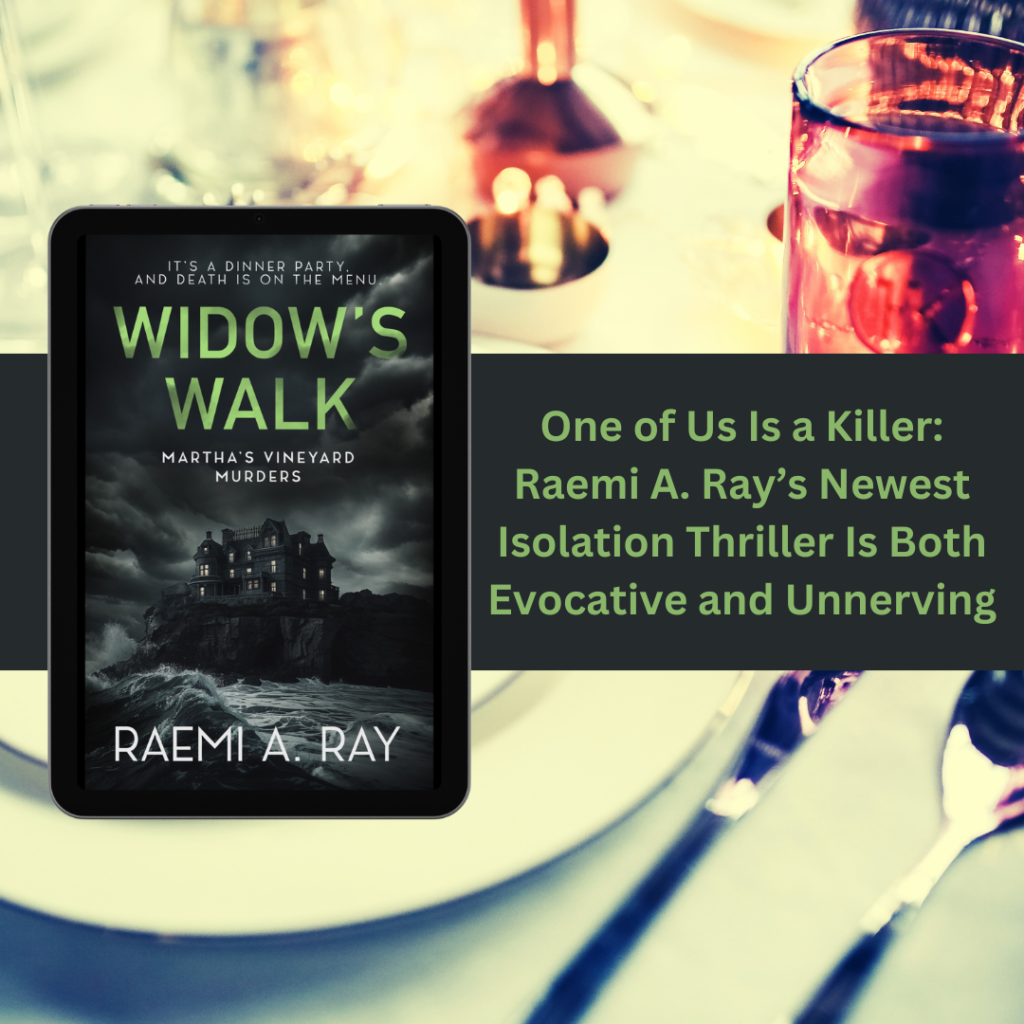
 “Did you really bring the bod—Elise this way?” It is just past midnight at Verinder House on Chappaquiddick Island, and returning amateur detective Kyra Gibson is closely following her boyfriend, Tarek Collins, down a set of poorly-lit basement steps, one hand trailing next to her on the wall. Three-quarters of the way through the third installation in Raemi A. Ray’s Martha’s Vineyard Murders series—Widow’s Walk—and already one-third of the original party is either dead, missing, or out of commission.
“No,” Tarek replies, “We used the entrance through the kitchen. It was added during the renovation. I haven’t been this way.” With the sudden death of the first victim—largely accepted by the dinner party guests as an unfortunate accident—and the subsequent removal of her body, both Kyra and Tarek have the nagging suspicion that something more sinister is at play at the historic mansion, and they are determined to uncover what it is.
As they move through the labyrinth of dank hallways beneath the first floor, they are halted by the appearance of a locked door, reinforced with an electronic panel that requires a keycard for entry. With their borrowed staffroom key, they unlock the door, slowly entering the room with their hearts in their throats. Immediately, they are overwhelmed by an acrid smell and the gruesome sight of a second body, lying motionless in a pool of blood on the concrete floor.
“We need to notify the others,” Tarek says after examining the body, “Make sure everyone is accounted for.” Trembling and dazed by their discovery, Kyra reads between the lines of Tarek’s emotionless declaration and the fear finally begins to settle deep beneath her skin: “We have to tell them one of us is a killer.”
Widow’s Walk
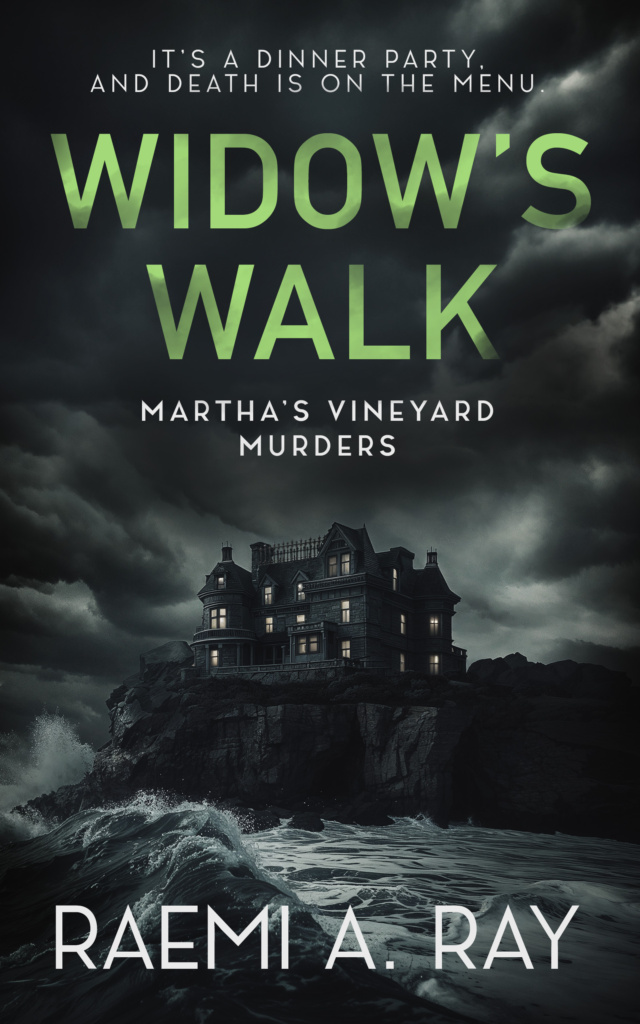
It’s a dinner party, and death is on the menu, as they say… Except nobody wants a part of this main course—well nobody sane, that is.
Like many of the classic whodunits, Ray’s Widow’s Walk begins with an ominous setting, a tense set of circumstances, and a cast of characters that barely know each other—yet somehow, still hate each other. You’d think Thanksgiving day get-togethers are agonizing enough—well try adding a business deal that’s barely hanging on by a thread, an insufferable boss, and a dead body, and you’ve got the crown jewel of a dysfunctional holiday. Throw in a severed internet cord on a secluded island with a rising tide and a raging murderer and you’ve probably decided you’re never going to a work function again.
Like in Ray’s previous novels A Chain of Pearls and The Wraith’s Return, partners Kyra Gibson and Tarek Collins steal what little of the narrative isn’t already theirs. All push-and-pull romantic intensity and gritty crime-solving, all else fades to the background when these two Sherlockian sleuths are in the same room together—even when that room may or may not include a dead body.
With this undeniable chemistry, it is almost expected that the novel should include dual perspectives from the two, but as keeping with the theme of the first two novels, Ray continues the narrative solely from Kyra’s POV—a choice that naturally leaves the reader desiring more, whether from the background characters or the plot itself. Yet even with this narrowed focus, Ray delivers another clean and gripping novel, which manages to deviate almost entirely from the previous small-town, slow-and-steady amateur-sleuthing from the first two books, and instead rewrites itself as its very own harrowing standalone murder mystery.
As compared to the first two novels, Ray’s matured writing style in Widow’s Walk delivers more than just a tighter plot and grislier deaths; it also supplies readers with an evocative underlying question that demands self-examination in the midst of a gruesome murder plot: how far would you go for love, and to what lengths would you go to keep it?
“Love is insanity,” Marilyn French, author of The Women’s Room, states, “The ancient Greeks knew that. It is the taking over of a rational and lucid mind by delusion and self-destruction. You lose yourself, you have no power over yourself, [and] you can’t even think straight.”
This is certainly true for the characters in Widow’s Walk, as desperation drives much of the narrative, ultimately leading to the climactic end at the very pinnacle of Verinder House: the widow’s walk at the mansion’s rooftop. This symbolic exit point, which once served as a lookout point for anxious seamen’s wives to wait for their husband’s returns—which often never came—sums up the entirety of the novel’s tragic focus, and will no doubt leave readers pondering the potential of being driven to their very own point-of-no-return.
Though entering the idyllic setting of Martha’s Vineyard from the beginning of the series isn’t necessary to understand the plot of Widow’s Walk, it would be a detriment to Ray’s carefully-plotted intimacy and intensity that develop both through, and as a result of the characters’ early interactions—chemistry that shapes the decisions that each character makes as the narrative progresses—to skip past her early works.
Micro-Review of A Chain of Pearls
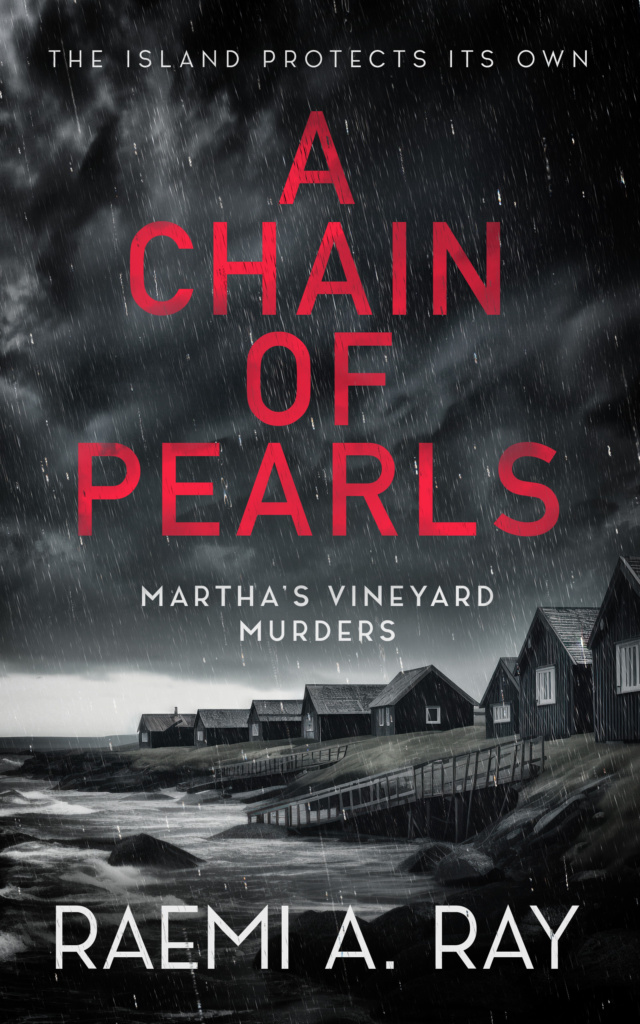
Ray’s series debut accomplishes an enormous feat, as it both charms with its small-town simplicity and also delivers a poignant examination of the inevitable complexities that arise from new love, lost family, and wealth. In A Chain of Pearls, Ray delves into the immense toll an estranged parent can take on a person, and the deep-rooted regret tangled within the threads of not knowing how or why they died—or whether it could have been prevented. When Ray’s main character, Kyra Gibson, is pulled into an investigation she never knew she wanted to open, the once aloof lawyer is forced to reconcile the small-town’s amicable rendering of her father with her own memory of an indifferent father she barely knew—and uncover the well-kept secrets of a close-knit island community in the process. Ray’s succinct prose and direct characterization elevate this simple premise to a moving examination of closure amidst the violence of a father’s unexpected end—and the beginning of a daughter’s acceptance of his legacy. A Chain of Pearls’ greatest asset lies not merely in its storytelling ability, but in the deep ways it extends its open heart to spread like roots inside your own.
Micro-Review of A Wraith’s Return
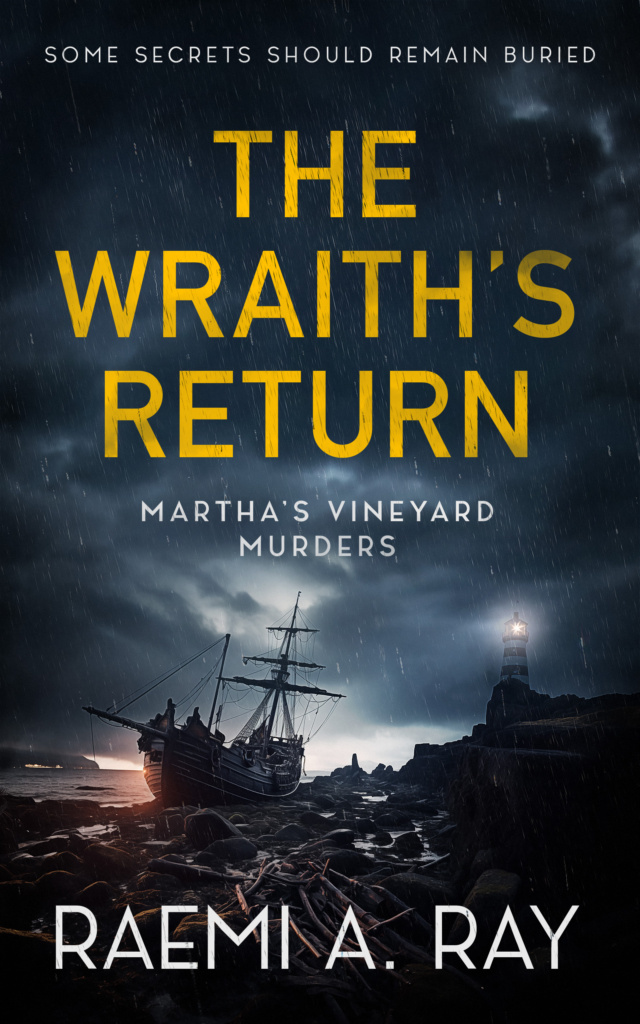
A Wraith’s Return is able to exceed even the greatest outstanding triumphs of Ray’s literary debut with just three seemingly innocent words: pirate ships and treasure. Reminiscent of the acclaimed Pirates of the Caribbean films and Treasure Island, Ray’s second novel reads as more of an adventure than a mystery novel—with quicker pacing, higher stakes, and greater conflict. If Ray’s first was a blend of Sherlock Holmes and Agatha Christie, her ensuing novel is an episode of Psych. Overflowing with heart, desperation, lies, and suspense, A Wraith’s Return subverts the industry stereotype of a lackluster sequel, instead delivering a swashbuckling rendition of a small-town murder mystery.
With three novels released in one year, it’s no wonder Ray’s Martha’s Vineyard series resonates with so many fans. From classic whodunits and treasure hunting to being stranded on an island with a murderer, Ray’s versatile series offers something to love for any reader—both new and returning. Her fresh takes on beloved, time-honored mystery tropes breathe new life into a genre that has been around for more than a century, and continues to be one of the most popular literary genres in the U.S.
Written by Tule intern, Kristina Gaffney




By posting a comment, you consent to have your personally identifiable information collected and used in accordance with our privacy policy.