

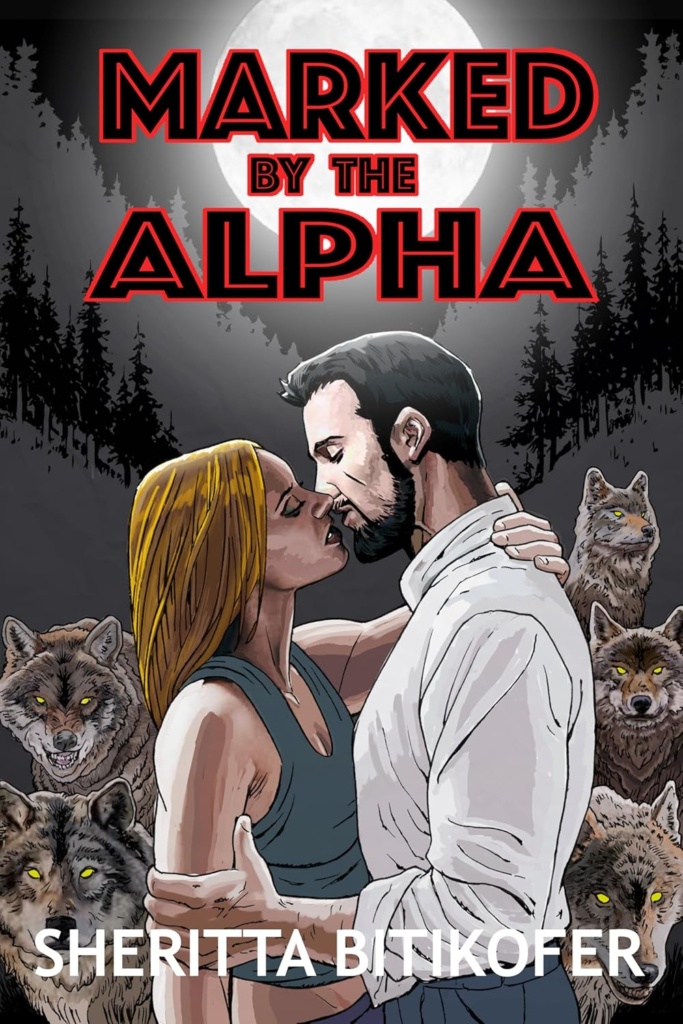
 Alpha males. Love them or hate them, there is an appeal in a man who can take charge. Maybe there’s an instinctive drive for women to seek out a mate who is strong and confident. People admire the person who can take command in a tough situation. They’re the people who get chosen for promotions and places of leadership. However, there’s a stigma around the term “alpha male,” and it’s become synonymous with “aggressive,” “arrogant,” and even “abusive.” No pun intended that all of these words happen to start with the same letter. So, how can we separate the trope from the social stereotype? The answer: go back to the source and how the word was first used within the context of
wolf pack hierarchies.
A study was conducted in 1947 by behaviorist Rudolph Schenkel of a captive wolf pack. In this study, he observed wolves forming a hierarchy of command, with the most powerful (the alpha) dominating the lesser wolves. Out of the lesser wolves, a second-in-command, the beta, appeared to act as an enforcer of the pack. At the very bottom is the omega, the perceived weakest member of the pack, and the one that becomes more like a punching bag or initiate play during stressful moments. As subsequent studies concluded, however, this initial study was inherently flawed. The wolves of the study were not related and forced into cohabitation. This environment and these circumstances produced the hierarchy that Schenkel documented, but this is not the natural state of wild wolf packs.
In reality, wolf packs are family units. The mating pair (mother and father) is the alpha pair and is in a position of authority over the rest of the pack (their offspring). In larger packs, such as the ones in Yellowstone National Park, there are some exceptions, including the incorporation of extended family members or lone wolves that broke away from other packs. But, at the basic level, a wolf pack is a family unit.[1]
The instinctive replication of a pseudo-family structure in a captive wolf pack, however, can still help us understand what it means to be “alpha.” To be an alpha means to be willing to step up, take command, and maintain order amongst a group. In a nuclear family unit, this role falls to the parents, but outside of a familial structure, that could be anyone who fits that description. Additionally, the alpha is not always the biggest and strongest. In a wolf study conducted by Jim and Jamie Dutcher in the Idaho wilderness, out of the first litter of pups that would become the leading wolf pack, Kamots and Lakota did not match the typically understood roles of alpha and omega. Lakota was the largest wolf of the pack, but became the pack’s omega. Kamots possessed greater charisma and courage and thus became the pack’s alpha.[2] What can be garnered from this example is that the biggest, baddest dude in the room isn’t automatically the true alpha male, as social labels would suggest. As my husband likes to explain, it’s the one who has a quiet but firm presence. He’s the one who, if a crisis should suddenly occur, he’s the one people would look to for guidance, protection, and leadership. An alpha isn’t demonstrative in his role. It comes naturally.
What does that mean for us paranormal romance lovers who feel drawn to the alpha wolf
shifters that pursue the leading lady of our books? In its essence, applying the hierarchy of
alpha/beta/omega to werewolves or wolf shifters that are supposed to have existed and formed packs long before the 1947 study could be problematic for some who take scientific accuracy seriously.[3] Others who don’t know the fallacies in the study probably won’t care or prefer to enjoy the fantasy of shifters letting their inner beasts create their own kind of order in a human world.
Regardless, if you peel back the labels, what readers enjoy out of the alpha male trope is the way the character behaves and interacts with those around him, especially his romantic interest. As I’ve said, there’s a primal, instinctive attraction toward a powerful, take-charge potential mate. That mate would be able to protect them, defend them, do anything to claim them as their own. What woman doesn’t want to be able to count on their partner to be in their corner and take care of them? There are lines that shouldn’t be crossed, and usually will be crossed in the dark romance genre (stalking, borderline abuse, etc.), but that’s a topic for another day. Also in the context of feminism, an alpha male may not always be the ideal mate because of the potential for an imbalanced relationship dynamic. A counter to this argument is that a true alpha male isn’t looking for a woman to subdue or control. He’s looking for his alpha female to be his equal, not someone to fuel his ego. At the heart of it, we like our leading alpha men to be bold and secure. They know what they want, they go after it, and they fiercely cherish it once it’s theirs. We want alphas in the best sense of the word, both between the pages and in our lives.
References:
[1] https://davemech.org/wolf-news-and-information/schenkels-classic-wolf-behavior-study-available-in-english/
[2] https://www.livingwithwolves.org/sawtooth-pack/meet-the-pack/
[3] https://mackenziekincaid.com/writing/writing-werewolves-alpha-beta-omega/
About the Author
 Sheritta Bitikofer writes paranormal romance with a particular fondness for wolf shifters and witches. Her stories are driven by one guiding belief: love inspires courage. Through fierce romances, unbreakable pack bonds, and the magic of covens and family, her characters fight for the lives—and loves—they deserve. Sheritta lives in northwest Florida, where she drinks far too much coffee and joyfully balances life as a wife and mother while crafting her next heartfelt paranormal love story.




By posting a comment, you consent to have your personally identifiable information collected and used in accordance with our privacy policy.